
- E-mail:info@moldhlh.com
- Tel:+86-198-6410-2854

Room 2003, 20th Floor, Xingji Building, Shangde Road, Shajing Street, Bao'an District, Shenzhen
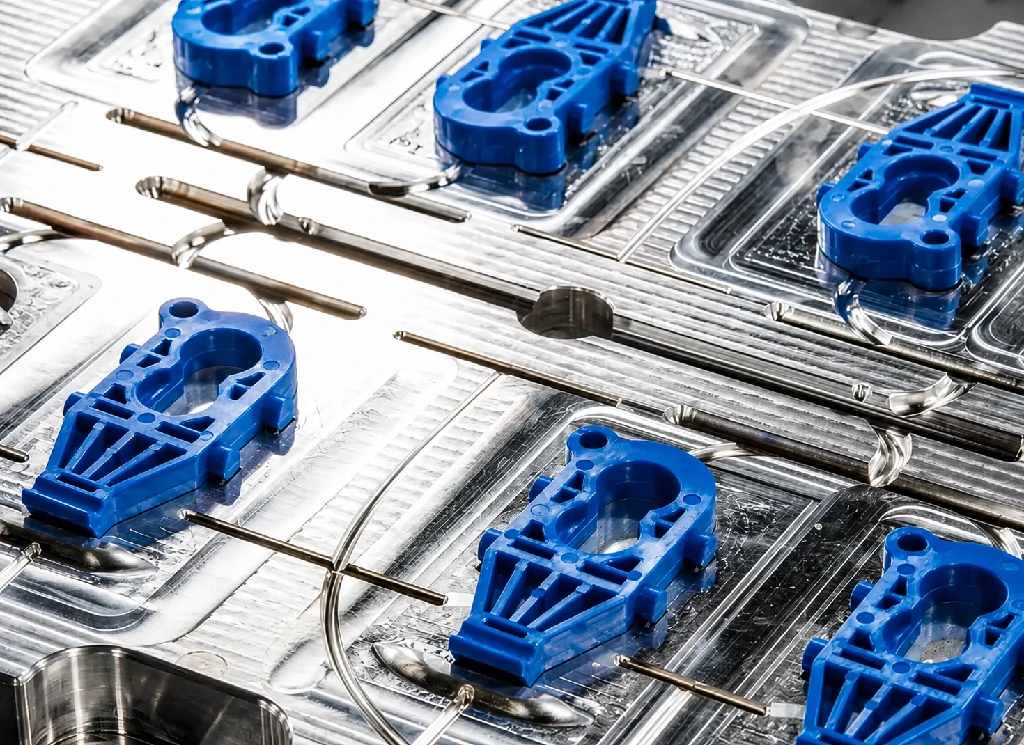
When developing a new product, choosing the right manufacturing process can have a major impact on cost, lead time, part quality, and production scalability.
Two commonly considered options are injection molding and CNC machining.
Both processes can produce high-quality custom parts, but they work in fundamentally different ways. Injection molding is particularly well suited for producing large quantities of plastic parts with consistent dimensions and repeatable quality, while CNC machining is often a better choice for prototypes, low-volume production, metal components, and parts requiring complex machining features.
So, which process should you choose?
The answer depends on several factors, including production volume, material, part geometry, tolerances, tooling requirements, and overall project stage.
This guide compares injection molding and CNC machining to help engineers, product developers, and purchasing teams make a more informed manufacturing decision.
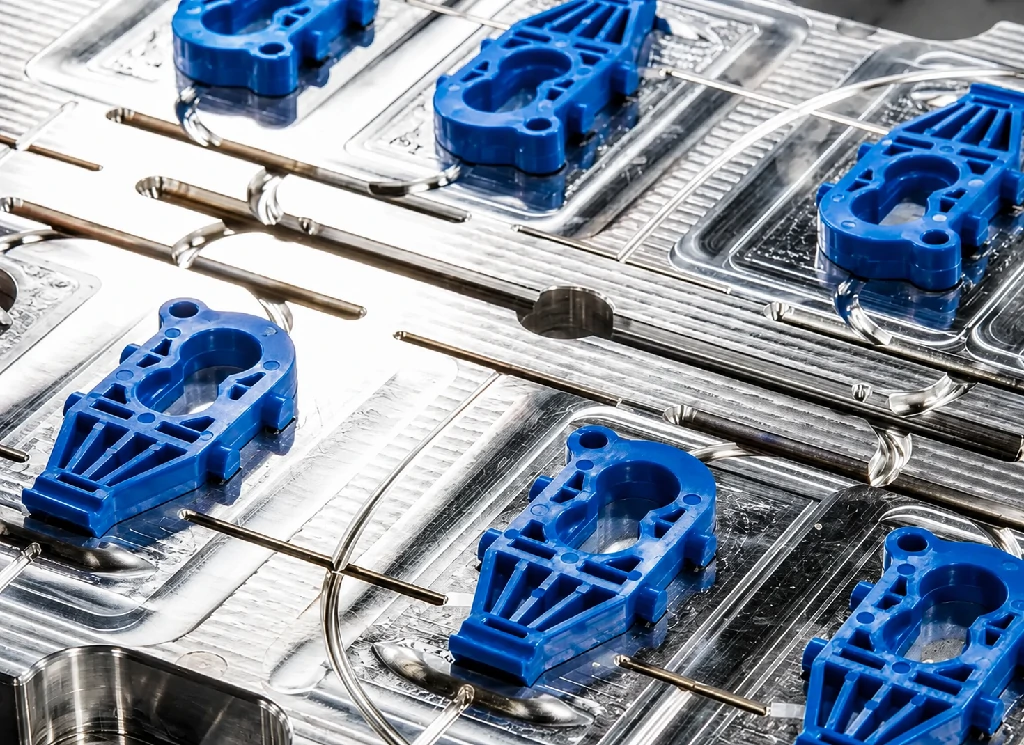
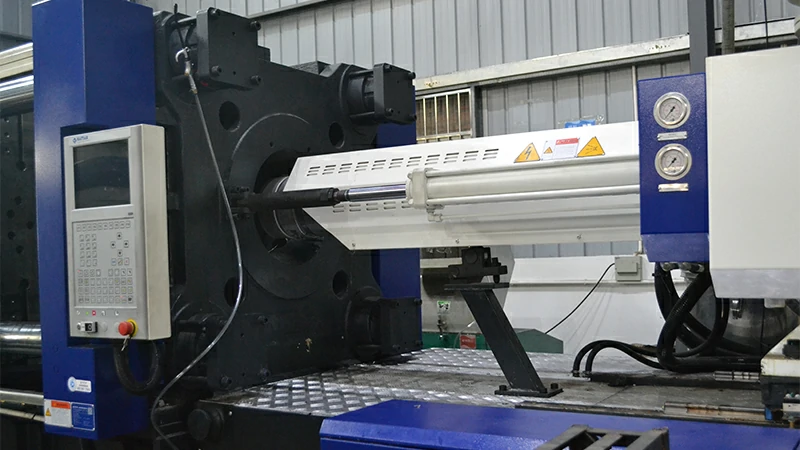
Injection molding is a manufacturing process in which molten plastic material is injected into a precision mold cavity. After the material cools and solidifies, the mold opens and the finished part is ejected.
Because the same mold can be used repeatedly, injection molding is particularly effective for producing large quantities of identical plastic components.
Common injection molding materials include:
ABS
Polycarbonate (PC)
Polypropylene (PP)
Polyethylene (PE)
PA6 / Nylon
POM
PMMA
PEEK
Injection molding can also support specialized processes such as insert molding, overmolding, and liquid silicone rubber molding. These capabilities are particularly useful for complex assemblies, ergonomic products, medical components, automotive parts, and multi-material designs.
For example, HLH Injection Molding provides plastic injection molding, insert molding, overmolding, and LSR molding for industries including automotive, medical devices, consumer products, aerospace, and robotics.
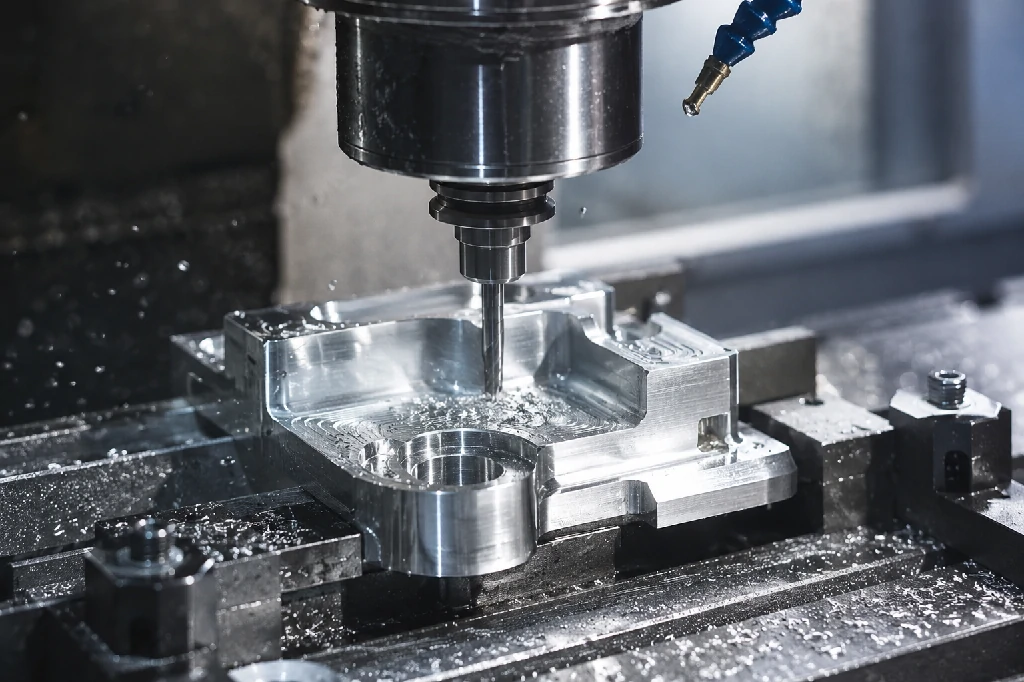
CNC machining is a subtractive manufacturing process. Instead of forming a part inside a mold, CNC machines remove material from a solid block or stock material until the required geometry is produced.
CNC machining can be used with a wide variety of metals and plastics, including:
Aluminum
Stainless steel
Steel
Brass
Titanium
POM
ABS
Nylon
PEEK
Modern CNC machining can include 3-axis, 4-axis, and 5-axis milling, CNC turning, and EDM.
This makes CNC machining highly versatile for prototypes, functional components, complex metal parts, and low- to medium-volume production.
For projects requiring precision metal or plastic components, HLH PrototypesCNC Machining Servicesprovides 3-, 4-, and 5-axis machining, CNC turning, EDM, and access to 200+ materials.
The biggest difference is the way each process creates the part.
| Factor | Injection Molding | CNC Machining |
|---|---|---|
| Manufacturing method | Forming | Subtractive |
| Typical materials | Plastics, elastomers | Metals and plastics |
| Tooling | Requires mold tooling | Usually no dedicated tooling |
| Prototype cost | Higher tooling cost | Lower initial setup |
| High-volume production | Excellent | Can be more expensive |
| Low-volume production | Can be less economical | Excellent |
| Design flexibility | Depends on mold design | Very flexible |
| Repeatability | Excellent | Excellent |
| Metal parts | Generally unsuitable | Excellent |
| Complex plastic parts | Excellent | Possible but may be less efficient |
| Production scalability | Excellent | Good |
Neither process is universally better.
The right choice depends on what you are trying to manufacture and how many parts you need.
Production volume is one of the most important factors.
Injection molding requires an upfront investment in tooling. However, once the mold has been produced, the cost per part can become very low as production volume increases.
For example, a mold that costs several thousand dollars may be difficult to justify for 50 parts but much easier to justify for 50,000 or 500,000 parts.
HLH's injection molding solutions currently support both rapid tooling for prototyping and longer-life production tooling.
CNC machining generally does not require a dedicated production mold.
This makes it attractive when you need:
· 1 prototype
· 10 prototypes
· 50 parts
· 100 custom components
· Low-volume production
The absence of injection molding tooling can significantly reduce the initial investment for small production runs.
Low volume → CNC machining is often more economical.
High volume → Injection molding is often more economical.
However, the actual break-even point depends on part geometry, material, tooling cost, machining time, and production requirements.
Tooling is one of the biggest differences between these two processes.
Injection molding requires a mold, which can be manufactured from aluminum or steel depending on the required tooling life and production volume.
For prototype and low-volume projects, rapid tooling can reduce the initial investment.
For larger production programs, hardened steel tooling can provide a much longer service life.
By contrast, CNC machining typically requires no dedicated mold.
This makes CNC machining particularly attractive during early product development when the design may still change.
CNC machining offers broad material flexibility.
It can manufacture parts from:
Aluminum
Stainless steel
Titanium
Brass
Engineering plastics
Carbon fiber composites
Other machinable materials
Injection molding, meanwhile, is primarily associated with thermoplastics and elastomers.
However, injection molding provides access to a very large range of plastic materials with different mechanical, thermal, chemical, and cosmetic properties.
The right material therefore depends on the final application.
For example:
Metal structural component → CNC machining
High-volume plastic housing → Injection molding
Flexible silicone component → LSR molding
High-temperature engineering plastic → Injection molding or CNC machining depending on geometry and volume
Both processes can manufacture complex components, but they approach complexity differently.
Injection molding is particularly effective for plastic parts with:
· Thin walls
· Ribs
· Bosses
· Snap-fits
· Textures
· Complex external surfaces
· Repeated features
However, the part must be designed with mold manufacturing and material flow in mind.
Important injection molding design considerations include:
· Draft angles
· Wall thickness
· Rib thickness
· Boss design
· Undercuts
· Gate location
· Ejection
· Parting lines
For example, mold design guidelines generally recommend maintaining relatively uniform wall thickness and using draft angles to improve part ejection and reduce manufacturing problems.
CNC machining has different design constraints.
Engineers need to consider:
· Tool access
· Internal corners
· Deep cavities
· Workholding
· Tool length
· Number of setups
· Machining orientation
This is why DFM should be considered before selecting the final process.
Both injection molding and CNC machining can produce precise components, but the achievable tolerance depends on the material, geometry, process, tooling, and inspection requirements.
CNC machining is often preferred when a component contains:
· Tight dimensional requirements
· Precision holes
· Threads
· Mating surfaces
· Complex metal features
Injection molding is generally preferred when the priority is repeatable production of large numbers of plastic components.
For high-precision applications, it is important to discuss critical dimensions with your manufacturing partner before production rather than assuming that a generic tolerance applies to every feature.
CNC machining can often move directly from CAD data to production because there is no injection mold to design and manufacture.
This makes it useful when you need functional prototypes quickly.
Injection molding has additional steps:
However, once the tooling is ready, injection molding can produce parts much faster at scale.
Therefore:
CNC machining is often faster for initial prototypes.
Injection molding is often faster for large production quantities after tooling is completed.
The cost structure of the two processes is fundamentally different.
The cost is strongly influenced by:
· Material
· Machining time
· Number of setups
· Tool changes
· Part complexity
· Surface finishing
· Quantity
As production volume increases, machining costs can remain relatively high because every part still requires machining time.
Injection molding has a larger upfront tooling investment but a much lower incremental cost per part at higher volumes.
This creates a typical cost curve:
Injection Molding
Higher initial cost → Lower unit cost at high volume
CNC Machining
Lower initial cost → Higher unit cost as volume increases
Therefore, production volume should always be considered when comparing quotations.
Injection molding is usually a strong option when:
· You need hundreds or thousands of plastic parts
· You expect long-term production
· The part design is relatively stable
· Consistent part-to-part quality is important
· You need complex plastic geometry
· Low unit cost is important
· Cosmetic appearance matters
· You need multiple material or color options
For example, automotive components, electronic housings, consumer products, medical device components, and industrial plastic parts can all benefit from injection molding.
CNC machining is often a better choice when:
· You need only a small number of parts
· You are still developing the product
· The design may change frequently
· The component is made from metal
· Tight tolerances are required
· You need a functional prototype
· No tooling investment is desired
· The geometry is better suited to machining
For early-stage product development, CNC machining can also be combined with 3D printing or other rapid manufacturing methods to accelerate design validation.
In many real-world product development projects, the answer is not injection molding or CNC machining—it is both.
A typical development process might look like:
3D Printing
↓
Concept validation
↓
CNC Machining
↓
Functional prototype
↓
Injection Molding
↓
Pilot production
↓
Mass Production
Different manufacturing processes can therefore support different stages of the same product.
This is especially useful when engineers want to validate a design before investing in production tooling.
This is where choosing a manufacturing partner with multiple capabilities can make the process much easier.
For example, a project may initially appear to require injection molding, but after reviewing the production volume and part geometry, CNC machining, vacuum casting, or 3D printing may be more appropriate.
Likewise, a product may start with 3D-printed prototypes and later transition to CNC machining or injection molding for production.
Instead of treating each process as an isolated service, it can be more efficient to work with a manufacturing partner that can support multiple stages of product development.
HLH Prototypes provides multiple manufacturing processes under one platform, including CNC machining, injection molding, 3D printing, vacuum casting, sheet metal fabrication, die casting, and carbon fiber manufacturing.
This can be particularly useful when your project requires different manufacturing technologies during prototyping, testing, and production.
Use the following simple guide as a starting point:
✔ You need high-volume plastic production
✔ Your design is relatively stable
✔ Low unit cost is important
✔ You need consistent parts at scale
✔ Complex plastic geometry is required
✔ You need prototypes or low quantities
✔ You require metal parts
✔ Tight tolerances are critical
✔ Your design is still changing
✔ You want to avoid upfront mold tooling
✔ You are developing a new product
✔ You need prototypes before production
✔ Different components require different processes
✔ You need to transition from prototyping to mass production
Injection molding and CNC machining are both powerful manufacturing technologies, but they solve different production problems.
Injection molding is generally optimized for repeatable, scalable plastic production, while CNC machining provides greater flexibility for prototypes, low-volume parts, metal components, and precision features.
The best process ultimately depends on your part design, material, quantity, tolerance, budget, and production stage.
If you are unsure which manufacturing method is suitable for your project, a professional DFM review can help identify the most practical solution before production begins.
For projects that require more than injection molding, you can also explore HLH Prototypes' comprehensive manufacturing services, where injection molding can be combined with CNC machining, 3D printing, vacuum casting, sheet metal fabrication, die casting, and other manufacturing processes.
The goal is not simply to choose a manufacturing process—it is to choose the process that makes the most sense for your product.
Explore HLH Prototypes' comprehensive manufacturing services
Room 2003, 20th Floor, Xingji Building, Shangde Road, Shajing Street, Bao'an District, Shenzhen